
Tips & Tricks
Hidden Gems vs. Viral Spots: How to Find Real Experiences Beyond Instagram
Discover what authentic travel experiences really look like — and how to find them anywhere in the world. Practical tips on connecting with locals, exploring hidden gems, and traveling with genuine curiosity.

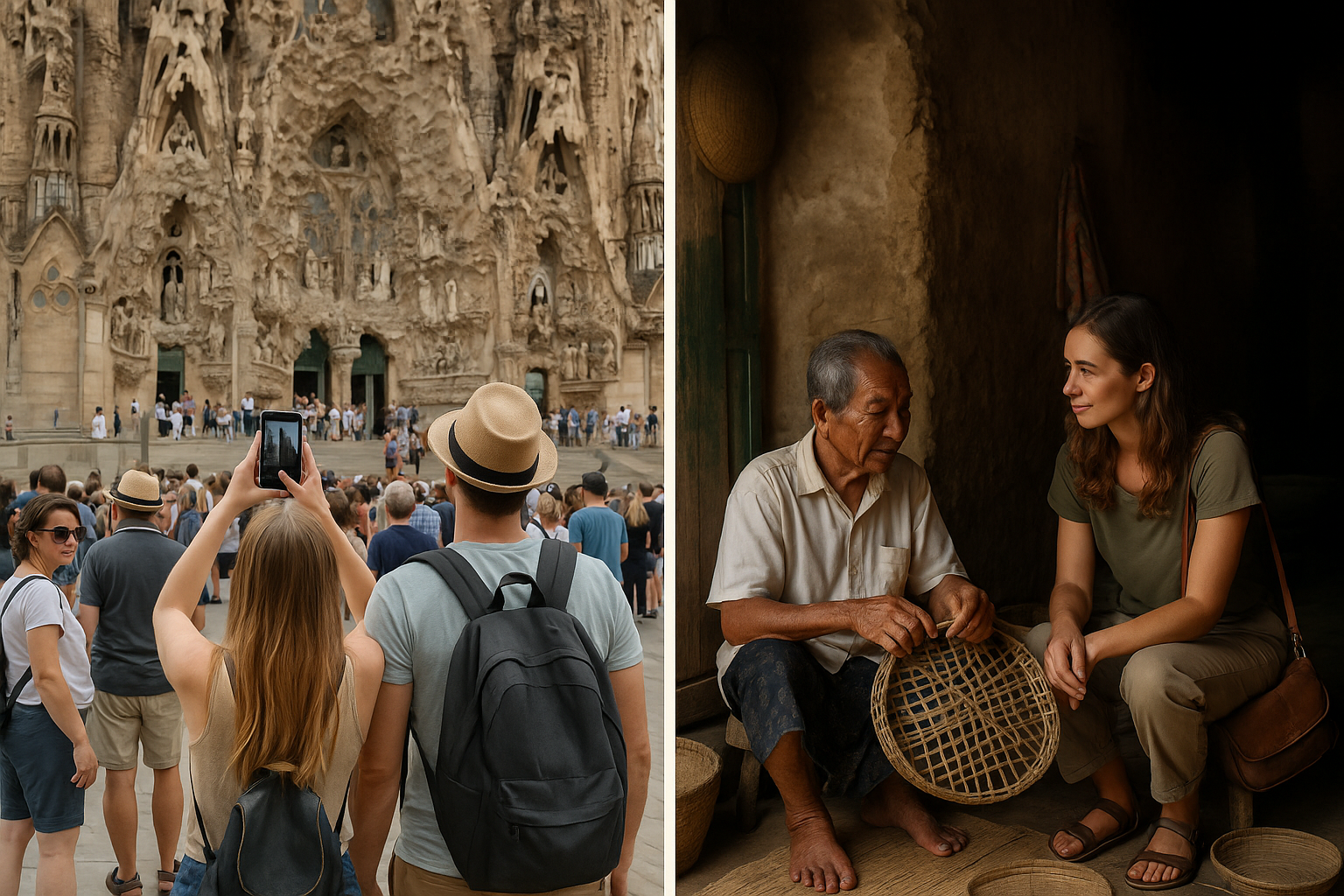
Hidden Gems vs. Viral Spots: How to Find Authentic Travel Experiences Beyond Instagram
Authentic travel experiences don’t usually come with a geotag. They happen in the small café where the owner knows every regular by name, on the back street that doesn’t appear in any listicle, or at the local festival you only heard about because you asked the right person at the right time. And yet, more and more of us are planning trips around screenshots and saved posts — chasing the same viewpoints, the same murals, the same “hidden” staircases that somehow appear on everyone’s feed.
That tension — between what the algorithm shows us and what travel actually feels like — is worth exploring honestly. Because authentic travel isn’t a trend. It’s a mindset. And once you shift into it, every trip changes.
This guide breaks down exactly what authentic travel experiences look like in practice, why they matter more than ever, and how you can start finding them — no matter where you’re headed next. Whether you’re planning your first solo trip or your tenth adventure abroad, this is for anyone who wants to travel deeper, not just further.
What Does “Authentic Travel” Actually Mean?
Authentic travel experiences are the ones that feel real. Not staged, not filtered, not designed for a camera. They’re the moments where you’re genuinely connecting with a place — its people, its rhythms, its everyday life — rather than just passing through it.
That could mean sharing a meal with strangers at a communal table, stumbling into a neighborhood street market that isn’t in any guidebook, or simply sitting in a local park long enough to watch the city move around you. Authenticity isn’t about how remote a destination is. It’s about how present you are when you’re there.
The good news? You don’t need to travel to the ends of the earth to find it. You just need to approach every destination with genuine curiosity and a willingness to go slightly off-script.
Why Authentic Travel Experiences Matter More Than Ever
Travel right now looks different from even a few years ago. Flights are more accessible, remote work makes longer stays possible, and social media has made every corner of the world feel reachable. That’s exciting — but it also means the places we visit are under more pressure than ever.
When everyone follows the same algorithm to the same destinations, something gets lost. The spontaneity. The surprise. The feeling that you discovered something rather than consumed it. Seeking out authentic travel experiences isn’t just better for you — it’s better for the communities you visit and the places you want to keep coming back to.
There’s also something deeper going on. Travelers aged 16 to 30 are increasingly choosing experiences over itineraries, connections over checklists. The shift toward authentic, meaningful travel isn’t a niche preference anymore — it’s becoming the default for a whole generation of curious, conscious explorers. And with more people on the move than ever before, the ability to find something genuinely real feels more valuable — and more rare — than it’s ever been.
What Happens When a Place Goes Viral
Viral destinations aren’t inherently bad. Exposure brings economic opportunity to communities that might otherwise be overlooked. But the speed and scale of social media attention can overwhelm places that were never designed for mass tourism.
Think about the small Slovenian village of Bled, or the narrow alleyways of Chefchaouen in Morocco. Both are genuinely beautiful. Both have also become so photographed that visiting them during peak season can feel more like queuing for a theme park ride than discovering somewhere real. Residents deal with overcrowding, rising rents, and the slow erosion of the everyday life that made those places interesting in the first place.
According to UN Tourism’s research on tourism and culture, unmanaged tourist flows can damage cultural heritage and displace local communities — outcomes that no travel influencer intends, but that happen anyway when thousands of people act on the same recommendation simultaneously.
The problem isn’t the destination. It’s the way we consume it.
Why Authentic Travel Experiences Require a Different Approach
Finding something genuine takes a little more effort than scrolling. But that effort is exactly what makes the experience worth having.
Start by changing your sources. Local blogs, regional newspapers, and niche interest communities — food forums, architecture enthusiasts, history groups — often surface places and events that never make it onto mainstream travel platforms. A food blogger based in Tbilisi will tell you things about Georgian cuisine that no algorithm will ever prioritize. A community forum for hikers in northern Portugal will point you toward trails that don’t appear in any guidebook.
Word of mouth still works, too. Talk to people. Ask your accommodation host where they eat lunch. Ask the person behind the counter at the market what neighborhood they’d recommend. These conversations are short, easy, and almost always lead somewhere interesting.
Timing Is Everything
Even the most crowded destinations have quieter versions of themselves. Visiting off-season, or simply adjusting your hours — arriving at a popular site before 8am or after 5pm — can completely change the experience. The place is the same. The feeling is entirely different.
👉 Read also: Hidden Gems Beyond the Guidebook: Greece's Milos, Italy's Capri, and Avoiding Tourist Traps
Secondary cities are also worth your attention. While everyone floods into Lisbon or Bangkok, places like Évora in Portugal or Chiang Rai in Thailand offer a slower, more personal version of the same culture — without the crowds, and often at a fraction of the cost.
Slow Down and Stay Longer
One of the most underrated ways to have a more authentic travel experience is simply to stay longer in fewer places. When you spend a week in one neighborhood instead of hopping between five cities, you start to notice things. The bakery that opens at 6am. The square that fills up on Sunday evenings. The shortcut the locals use. These details don’t show up on any map — they reveal themselves when you give a place enough time to open up to you.
Slow travel also means you’re more likely to build real connections. You become a familiar face rather than a passing tourist. And those connections are often where the most memorable moments come from.
Practical Ways to Discover Hidden Gems
You don’t need a travel agent or an expensive tour to find authentic experiences. Here are some approaches that actually work:
- Ask locals directly. Your guesthouse host, the person at the coffee shop, the shopkeeper down the street — they know things no app does. A simple “where do you actually go on weekends?” can open doors you didn’t know existed.
- Use niche online communities. Subreddits, Discord travel groups, and local Facebook communities are full of people sharing genuine recommendations. Search for groups specific to your destination rather than general travel forums.
- Follow local creators. Find social media accounts run by people who actually live in the place you’re visiting. Their content reflects everyday life, not the tourist highlight reel.
- Wander without a plan. Leave a few hours in your itinerary with no agenda. Some of the best discoveries happen when you turn down an unfamiliar street just because it looks interesting.
- Attend local events. Markets, festivals, community gatherings, sports matches — these are where you see a place as it actually is, not as it presents itself to visitors.
- Learn a few words of the local language. Even a basic greeting or a genuine attempt to say “thank you” in someone’s mother tongue changes the dynamic of an interaction. It signals respect, and people respond to that in ways no travel app can replicate.
Types of Authentic Travel Experiences Worth Seeking Out
Authentic travel looks different for everyone — and that’s the point. But there are a few types of experiences that consistently deliver something real, wherever you are in the world.
Food as a Window Into Local Life
Forget the restaurant with the English menu displayed outside. The most authentic food experiences happen in the places locals actually choose — the market stall that’s been run by the same family for decades, the canteen where workers eat lunch, the neighborhood bakery that sells out by 9am. Eating where the locals eat isn’t just about the food. It’s about understanding how a community lives, what it values, and how it comes together around a table.
Cultural Immersion Through Everyday Moments
Some of the most meaningful travel experiences aren’t activities you book in advance. They’re the conversations that happen by accident, the local celebration you stumble into, the afternoon you spend watching life unfold in a neighborhood square. Cultural immersion doesn’t require a tour guide — it requires patience and genuine curiosity.
Connecting With Local Communities
Volunteering, attending community events, taking a class taught by a local artisan, joining a neighborhood sports game — these are the kinds of experiences that create real connections. You stop being an observer and start being a participant. Even a short interaction, approached with respect and openness, can shift the entire tone of a trip.
Exploring Beyond the Main Attractions
Every city has its famous landmarks — and most of them are worth seeing. But the streets around those landmarks are often where the real character lives. Wander a few blocks in any direction from the main square, and you’ll usually find a version of the city that feels far more alive and far less curated.
Staying Where Locals Stay
Your accommodation shapes your entire experience more than most people realize. A family-run guesthouse in a residential neighborhood puts you inside the rhythm of daily life from the moment you wake up. You hear the sounds of the street, eat breakfast where the neighbors eat, and get directions from someone who actually cares where you end up. That’s a fundamentally different trip from checking into a hotel in the tourist district — even if the hotel is perfectly comfortable.
Learning Something New From a Local Expert
One of the most rewarding ways to connect with a destination is to learn something while you’re there. A pottery workshop with a local craftsperson in Oaxaca. A street food cooking class in Hanoi. A traditional weaving lesson in a small Andean village. These aren’t just activities — they’re conversations, exchanges, and windows into a way of life you’d never encounter from a tour bus. You leave with a skill, a story, and a genuine connection to the place.
Authentic Travel Experiences on Any Budget
Here’s something worth saying clearly: authentic travel experiences don’t cost more than generic ones. In fact, they’re often cheaper. Eating at a local market stall, staying in a family-run guesthouse, exploring a neighborhood on foot — none of that requires a big budget. What it requires is intention.
The most expensive part of travel is usually the stuff that keeps you furthest from the real experience: resort packages, tourist-area restaurants, guided tours that herd you from one landmark to the next. Redirect that spending toward local guides, community-run workshops, and independently owned accommodation, and you’ll almost always get more for your money — and a far richer trip.
If you’re traveling on a tight budget, lean into it. Cook at a local market. Take public transport instead of taxis. Spend your afternoons in parks and public spaces rather than paid attractions. These aren’t compromises — they’re often the choices that lead to the most authentic moments.
How to Plan a Trip Around Authentic Experiences (Without Over-Planning It)
There’s a sweet spot between showing up with zero preparation and filling every hour with bookings. The most authentic journeys tend to live right in the middle.
Before you go, do the kind of research that builds genuine curiosity rather than a rigid itinerary. Read a novel set in your destination. Watch a documentary made by a local filmmaker. Follow a journalist or food writer who actually lives there. This kind of background doesn’t just give you things to do — it gives you a lens through which to see the place when you arrive.
Then, once you’re there, leave space. Block out mornings with no agenda. Say yes to things that weren’t on the plan. Let a conversation at a coffee shop redirect your afternoon. The structure you build before you leave is just a scaffold — the real experience gets built on top of it, in real time, by the place itself.
Questions to Carry With You
Instead of a packed schedule, try arriving with a handful of open questions. What do people here celebrate? What are they proud of? What’s changing, and what’s stayed the same for generations? These aren’t questions you answer with a Google search — they’re questions you answer by being present, paying attention, and talking to people. Carry them with you, and you’ll find the answers in unexpected places: a mural on a side street, an overheard exchange at a market, a conversation that starts because you asked for directions and ended an hour later.
👉 Read also: Hidden Gems in Greece: Milos Island Beyond the Instagram Spots (2026)
How to Use Technology Without Letting It Drive the Trip
Apps and platforms can be useful starting points — but the best authentic travel experiences rarely come from an algorithm. Use technology to handle logistics: transport, accommodation, language translation. Then put your phone away and let the place surprise you. The map can get you to the neighborhood. What you find when you wander through it is entirely up to you.
Authentic Solo Travel vs. Group Travel: Which Delivers More?
Both can be deeply authentic — but they work differently. Solo travel forces you out of your comfort zone in the best possible way. Without a group to retreat into, you’re more likely to strike up conversations, accept unexpected invitations, and follow your own curiosity without compromise. That openness is one of the fastest routes to a genuinely authentic experience.
Traveling with others isn’t a barrier, though. A small group of curious, open-minded people can discover just as much — sometimes more — because you’re pooling different instincts and perspectives. The key in both cases is the same: stay curious, stay flexible, and resist the pull of the pre-packaged itinerary.
How to Support Communities Without Exploiting Them
One of the most meaningful ways to have authentic travel experiences is to spend your money intentionally. Eat at family-run restaurants. Book local guides rather than international tour operators. Stay in guesthouses owned by people who actually live there.
This isn’t just ethical — it’s practical. Local guides know things that no app does. They’ll take you to the viewpoint the tourists miss, tell you the story behind the building you walked past, and introduce you to the kind of spontaneous, unscripted moments that become the memories you actually keep.
The Responsible Travel guide to sustainable tourism puts it well: the goal is to leave a place better than you found it — or at minimum, no worse. That starts with being conscious of where your money goes and how your presence affects the people who actually live there.
The Paradox of Sharing What You Find
Here’s the uncomfortable truth: the moment you post that “hidden” café or that quiet beach, it becomes a little less hidden. Every share is a small contribution to the process that turns a local favorite into a tourist attraction.
That doesn’t mean you should never share anything. It means being thoughtful about what you share, when you share it, and how you frame it. There’s a difference between posting a photo that invites reflection and posting a pinned location that sends a thousand people to the same spot next weekend.
Some travelers choose to share experiences without revealing exact locations. Others wait months before posting. Neither approach is perfect, but both reflect an awareness that travel isn’t just about you — it’s about the places and people you encounter along the way.
Finding the Balance
You don’t have to avoid popular destinations entirely. Some viral spots are viral for good reasons. The key is in how you engage with them — whether you rush in for a photo and leave, or whether you slow down, look around, and actually try to understand where you are.
Authentic travel experiences aren’t reserved for remote jungles or undiscovered villages. They can happen anywhere, as long as you’re present enough to notice them. The difference between a tourist and a traveler isn’t the destination — it’s the curiosity you bring with you.
So do the extra research. Talk to locals. Wander without a plan sometimes. Spend your money where it matters. And before you post, ask yourself whether you’re sharing an experience or just a location. Travel slowly enough to actually feel the places you visit, and you’ll find that the most memorable moments rarely come from a trending hashtag — they come from showing up with genuine curiosity and an open mind.
Frequently Asked Questions About Authentic Travel Experiences
What makes a travel experience authentic?
An authentic travel experience is one where you genuinely connect with a place — its people, culture, and everyday rhythms — rather than just ticking off landmarks. It’s less about where you go and more about how present and open you are when you get there. Sharing a meal with locals, attending a community event, or simply wandering a neighborhood without a plan can all be deeply authentic, depending on the mindset you bring.
How do I find authentic local experiences when I travel?
Start by talking to people — your guesthouse host, a shopkeeper, someone at a market. Ask where they actually spend their time. Beyond that, follow local creators and bloggers rather than mainstream travel accounts, join destination-specific online communities, and leave room in your schedule to wander without an agenda. The best discoveries rarely come from a top-ten list.
Can I have authentic travel experiences in popular tourist destinations?
Absolutely. Authenticity isn’t about avoiding well-known places — it’s about how you engage with them. Visit at quieter times, explore the neighborhoods around the main attractions, eat where locals eat, and slow down enough to actually absorb where you are. Even the most visited cities have layers that most tourists never reach.
Is authentic travel more expensive?
Not at all — it’s often cheaper. Eating at local market stalls, staying in family-run guesthouses, using public transport, and spending time in parks and public spaces are all budget-friendly choices that tend to deliver far more genuine experiences than their pricier tourist-facing alternatives.
How do I travel authentically without being disrespectful to local culture?
Approach every place with genuine curiosity and humility. Learn a few words of the local language. Dress appropriately for the context. Spend your money at locally owned businesses. Ask before photographing people. And remember that you’re a guest — the goal is to understand and appreciate a culture, not to consume it for content. When in doubt, follow the lead of the people around you.
What’s the difference between cultural immersion and cultural tourism?
Cultural tourism often means observing a culture from a distance — visiting a museum, watching a performance put on for visitors, or ticking off heritage sites. Cultural immersion goes deeper. It means participating in everyday life: cooking with a local family, joining a community event, learning a traditional craft from someone who actually practices it. The difference is engagement. One is watching. The other is experiencing.
This article was produced with AI assistance and reviewed editorially.


Planning Your First Solo Trip: A Step-by-Step Blueprint for Unforgettable Travel

Teaching English Abroad in 2026: Top Countries, Visa Requirements & Real Salaries


